Ask a Naperville listing agent for this year's median home price and you'll get an answer that sounds precise: somewhere around $595,000, based on the three months ending in May 2026. Ask an agent whose recent closings sit within walking distance of the Riverwalk and you'll hear a different number entirely: $960,000, with price per square foot nearly double the citywide figure. Both agents are correct. They're describing two markets that happen to share the same city limits.
That gap is the reason a single "median price" headline is close to useless for anyone actually comparing Naperville to another suburb, or comparing one Naperville subdivision to another. The number isn't wrong. It's just answering a narrower question than most buyers think they're asking.
The Citywide Number Is Being Pulled by a Small, Fast-Moving Slice
Naperville's broader market, covering the three months ending in May 2026, posted a median sale price of $595,000 and a median of $273 per square foot, up 3.4 percent year over year. Over the following three-month window, April through June 2026, the median edged up slightly to roughly $619,663. Days on market held steady around 43 to 44 days across both windows.
Downtown Naperville alone, over that same three-month window ending in May 2026, posted a median sale price of $960,000 and $508 per square foot, up 28 percent and 41.5 percent respectively from a year earlier. Naperville sold 420 homes citywide in May 2026 alone. Downtown's slice of that total is small enough that a handful of high-dollar closings near the train station and the river can swing the neighborhood's year-over-year numbers by double digits without moving the citywide median more than a percentage point or two. That's how a submarket posts a 41.5 percent jump in price per square foot while the city it sits inside barely registers 3.4 percent.
The lesson isn't that downtown is a bad comparison. It's that downtown and the rest of Naperville are answering different questions, and a citywide median smooths over which one you're actually asking.
What the Rest of Naperville Actually Sells For
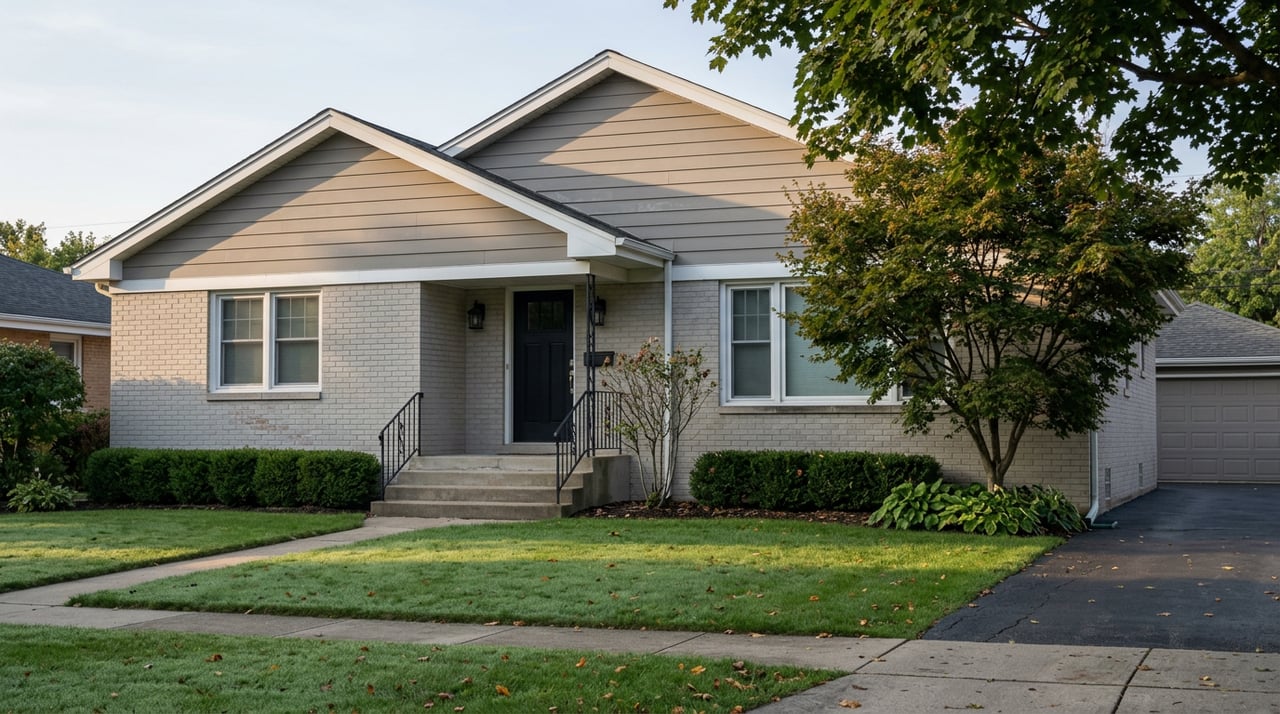
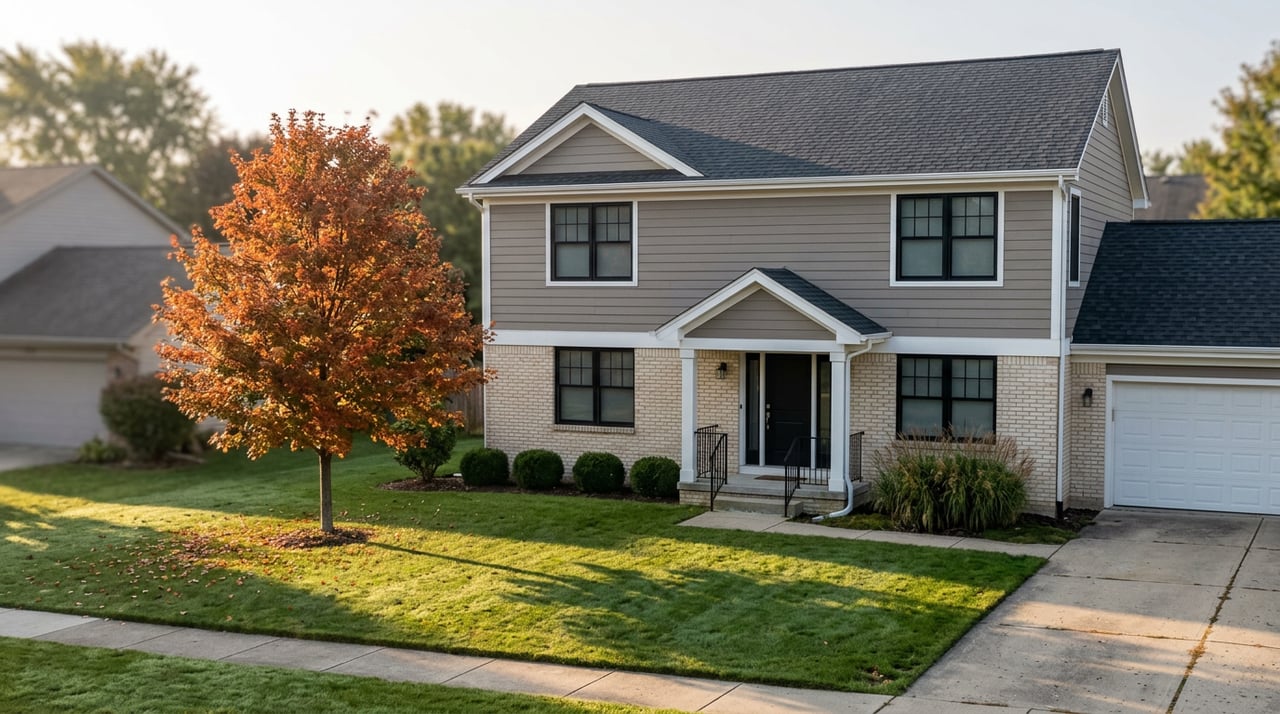
Move outside the Riverwalk radius and the market looks different again. The core of Naperville's detached-home inventory, the price band most buyers land in, brackets a median around $699,000 and an average around $787,369. This is where you find updated three- and four-bedroom colonials and larger ranches in established subdivisions like Cress Creek, Hobson West, and Oakhurst. Homes in this range with solid school-boundary assignment and recent updates tend to move quickly, and the list-to-sale ratio here runs about 99.4 percent, meaning there's very little room to negotiate off list price once a home is priced correctly.
That's a meaningfully different transaction than a downtown purchase. Downtown buyers are paying a walkability and Riverwalk premium on top of the home itself. Core-subdivision buyers are competing on a tighter margin against other buyers who've already done their homework on comparable sales in Cress Creek or Oakhurst specifically, not Naperville broadly.
New Construction and Attached Product Add Two More Layers
Above that core band sits a newer-construction and luxury tier: neighborhoods like West Highlands and Ashwood Park for newer single-family construction, and Jefferson Estates for custom-built luxury homes near downtown. Detached homes in this tier commonly clear $350 or more per square foot, driven by finish level, lot quality, and proximity to downtown rather than subdivision age.
Below the detached market entirely sits Naperville's attached product, condos and townhomes like River Shores and Charlestown Woods, which typically run $160 to $240 per square foot. The highest prices in this segment cluster near the downtown Naperville Metra station and the Route 59 corridor, where commuter access substitutes for square footage.
Lay all four tiers side by side and the spread becomes obvious:
| Naperville segment | Example areas | What drives the price |
|---|---|---|
| Downtown / Riverwalk | Downtown Naperville | Walkability, Metra proximity, small transaction volume amplifying swings |
| Established core | Cress Creek, Hobson West, Oakhurst | Updated colonials and ranches, tight list-to-sale ratio |
| Newer construction / luxury | West Highlands, Ashwood Park, Jefferson Estates | Lot size, finish level, custom builds |
| Attached (condo/townhome) | River Shores, Charlestown Woods | Route 59 and downtown station proximity |
A buyer quoting the citywide $595,000 median is really averaging across all four rows. None of the four rows actually sells at that number.
The Basement Nobody Counts
There's a second distortion hiding inside every price-per-square-foot figure quoted above: it reflects above-grade living space only. Naperville has an unusually high rate of full finished basements, and that square footage adds real usable living space without ever entering the per-square-foot math. Two homes with identical above-grade footprints, one with a finished basement and one without, can carry meaningfully different real living space while showing up as the "same size" in a listing sheet comparison. That's part of why $220 and $320 per square foot both register as normal ranges within the same detached market segment. The spread isn't only location. Some of it is basement square footage nobody's counting.
Two Counties, Two School Districts, One City Limit
Naperville also spans two counties, DuPage and Will, and includes School Districts 203 and 204. A buyer comparing "houses in Naperville" may in practice be comparing houses in different counties with different property tax structures and different district boundary lines, all under one municipal identity. That boundary is a documented price variable in how homes are marketed and compared, independent of which district a family ultimately prefers.
What This Means If You're Comparing Naperville to Somewhere Else
If you're cross-shopping Naperville against another suburb using a single median price, you're likely comparing an average across all four Naperville tiers against a much narrower slice of the other town. A few questions make the comparison sharper:
- Which Naperville segment does the quoted median actually describe: downtown, core, new construction, or attached?
- Does the price-per-square-foot figure include finished basement space, or only above-grade square footage?
- Is the property in DuPage County or Will County, and which school district does it fall under?
- What's the list-to-sale ratio for that specific subdivision, not the citywide average? A 99.4 percent ratio in Oakhurst tells you something different than a citywide days-on-market figure that blends fast-moving core inventory with slower luxury listings.
A Few Questions Worth Asking Before You Compare Naperville to Anywhere Else
Why did Downtown Naperville's price per square foot jump 41.5 percent in a year while the citywide number moved only 3.4 percent? Downtown represents a small share of total transactions, so a handful of high-dollar closings can swing its year-over-year percentage sharply without moving the much larger citywide pool by nearly as much.
Is Naperville currently a buyer's market or a seller's market? It depends heavily on which segment. The core detached tier, with a 99.4 percent list-to-sale ratio, still behaves like a seller's market for correctly priced homes. Citywide, the three-month window ending in May 2026 showed a nearly flat median, down 0.06 percent year over year, before ticking up 0.8 percent over the following window. That's a market holding its value on measured volume rather than moving sharply in one direction, and the answer looks different depending on which of the four tiers you're standing in.
Comparing neighborhoods on a median price alone will always flatten out the parts of the market that actually determine what your budget buys. If you're weighing a move into Naperville, or comparing it against another southwest or west suburb, it helps to walk through which segment your price range actually lands in before you start touring. The Niki Rocco Group can pull the comparable sales for the specific subdivision and segment you're considering, not just the citywide average, so you know which Naperville you're actually buying into.